Pages
Safety
Safety is the state of being "safe" (from French sauf), the condition of being protected against physical, social, spiritual, financial, political, emotional, occupational, psychological, educational or other types or consequences of failure, damage, error, accidents, harm or any other event which could be considered non-desirable. This can take the form of being protected from the event or from exposure to something that causes health or economical losses. It can include protection of people or of possessions.
Avoid unnecessary stress
Working in Confined Spaces
- Oxygen deficiency
- Exposure to toxic substances
- Combustible or Explosive
- Test for oxygen deficiency
- Sample for combustible gases (Most combustible gas meters will not work in oxygen deficient atmospheres.)
- Continually monitor for toxic substances (i.e., gases) as work progresses
- If space is unable to be vented, be use to provide proper respiration equipment
- If space can be vented, continually flush out the space with fresh air
- Be aware that spark producing equipment should never be used to flush out confined spaces
- Never rush to the aid of a fellow employee in a confined space
- Always be sure that someone watches work in a confined space outside of the space
- All workers in a confined space must work with a lifeline attached outside of the space
- All rescuers must be competent in the use of rescue equipment and self-contained breathing units
Watch your Feet
- Safety shoes – have toe guards that meet testing requirements found in the American Society of Testing Material (ASTM) F2413-05 consensus standard on protective footwear. Steel, reinforced plastic and hard rubber are used for safety toes, depending on their intended use.
- Electrical hazard shoes – offer protection against shock hazards from contact with exposed circuits. These shoes are most effective when they are dry and in good repair.
- Puncture resistant shoes – protect against hazards of stepping on sharp objects that can penetrate standard shoe soles. They are used primarily in construction work.
Communicate Hazards
Protect Your Hearing
- Reduce the noise reaching your ears. Nothing can totally block sound, but some hearing protection devices can block out part of the noise.
- Electronic hearing protection devices permit conversations and warnings to reach the ear, but prevent harmful sound-pressure levels. Other electronic hearing protectors pick up and amplify desirable sounds. Some earmuffs or earplugs combine with communication systems for use in noisy areas.
- Earmuffs – filled with liquid or foam – come in various styles for function and comfort. Earmuffs are fitted with a headband made of metal or plastic. Some headbands can be folded or put around the front or back of the neck in various positions. Cooling pads are even available for earmuffs worn in hot work environments.
- Earplugs can be pre-molded to fit all wearers, or custom molded to fit exactly. They can be made expandable or non-expandable, and may be either reusable or disposable. Earplugs are available on cords you can wear around your neck so you can use them easily.
- Cooperate with your workplace’s hearing protection program. Wear recommended personal protective equipment and take good care of it by cleaning it according to the manufacturer’s recommendation and placing it as needed.
Are You Safe or Just Lucky?
- An incident where you had “luck” on your side
- The difference between a near miss and an accident
- Be aware of your surroundings
- Accidents happen every day in the workplace
- Safety is not a matter of luck
Safety is Common Sense
- Always wear the proper personal protective equipment.
- Don’t over exert yourself – get help with heavy tasks.
- Don’t over extend yourself when on ladders – and risk losing your balance.
- Always use the proper tool for the job.
- Concentrate on your work.
- Look for unsafe acts or unsafe working conditions – and then report them.
- Watch out for others – remember you are part of a team.
- Ask the following questions before you begin to work
- Are the conditions safe to do the work?
- Are the methods we are going to use safe?
- Does everyone know what to do?
- Does everyone know how to do it?
- Can I fall, get struck by, get caught between or under, or get electrocuted on this job?
Machine Safety
Requirements for Safeguards
- Machines which have a grinding, shearing, punching, pressing, squeezing, drawing, cutting, rolling, mixing or similar action, including pinch points and shear points, whereas an employee comes within the danger zone, shall be guarded at the point of operation in a manner that provides protection for the employee.
- Keys, set screws, projections or recesses which create a hazard not guarded by the frame of the machine or by location shall be removed, made flush or guarded.
- They Should Prevent Contact: The safeguard must prevent hands, arms, or any other part of a worker's body from making contact with dangerous moving parts. A guard should not only prevent accidental contact but should prevent workers from intentionally going around or bypassing the guard.
- They Should Be Secure: If the guard is easily removable, this means it will be ineffective. The guards should be of durable material and most should be bolted or screwed on so that they require tools for removal.
- They Should Create No New Hazards: The guard itself should not create a new hazard. For example, sharp or jagged edges could cause lacerations. The guards should be affixed in a manner that eliminates sharp edges.
- They Should Create No Interference: A good guard should allow the employee to work comfortably and efficiently--since otherwise it may be removed.
- They Should Allow Safe Maintenance: If possible, guards should be designed so as to allow minor maintenance on the machines without either removing the safeguards or being exposed to the hazard. If the guard must be removed or deactivated, then lock-out procedures should be followed before any maintenance is performed.
Stop Work Authority
It is the expectation and a requirement of Company that:
- All employees and its contractors have the authority and obligation to stop any task or operation where concerns or questions regarding the control of HSE risk exist,
- No work will resume until all Stop Work Authority concerns have been adequately addressed,
- Supervisors respond in a positive way to let employees know that it is OK to stop work,
- Any form of retribution or intimidation directed at any individual or company for exercising their authority as outlined in this program will not be tolerated.
- Employees do not know or understand their tasks or responsibilities
- A new hazard is identified that was not expected or anticipated
- Level of risk associated with hazard is not known or understood
- A hazard is not appropriately controlled
- A change in conditions is noticed
- An employee does not feel safe with task conditions
Horseplay – Don’t Do It!
- Scaring someone.
- Air hosing someone.
- Wrestling with someone.
- Boxing.
- Goosing, pinching, grabbing, back slapping
- Dropping objects next to someone to startle.
- Throwing water on someone.
- Throwing objects or tools at someone.
- Discharging a fire extinguisher.
Don’t Slip Up
Slips and falls are a leading cause of workplace injuries. What do experts recommend as the single most important step to take in preventing slips and falls? Simple...keep floors clean, dry, and free of obstruction. When it comes to safeguards against slips and falls, nothing is more important than good housekeeping.
When you walk through a work area, look for spills, grease spots or dust (flour and machine byproducts can be highly slippery). Water spilled by drinking fountains or tracked in on wet or snowy days can create a major hazard. Look around and be aware of wet areas or objects on the floor. Then take the time to do something about it. Clean up the hazard or place cones or hazard signs nearby, warning of the danger. People can walk on extremely slippery surfaces by modifying their speed and stride, provided they know about the dangerous condition. It’s the lack of warning that can cause problems. An unexpected shift from a smooth to a slick surface heightens the likelihood of a slip or fall.
A Slip…A Trip…A Hospital Trip
Slips, trips and falls are a serious safety concern in the workplace, taking over 700 lives and inflicting over 300,000 serious injuries every year.
Don’t become a statistic…The most common kinds of accidents at work are slips, trips and falls. Be safe and look before you leap.
Look for signs of flooring change. Changes in lighting and floor color can conceal a change in friction or angle between adjacent surfaces. Wherever possible, waxes and polishes should cover an entire area, extending to natural breaks in flooring. Choose footwear according to floor surface.
Consider slips and falls when you’re doing a job. Some tasks, such as pushing loads, may require special attention to slip-resistant floor surfaces or carefully selected sole material and treads. For some jobs, better lighting or a stable brace is helpful. Carefully placed and mounted hand rails, poles or hip bars may help operators brace themselves. This reduces reliance on foot/floor friction, which thereby reduces the potential for slipping.
Slips can occur because of how you walk on a surface. Some simple things you can do to minimize your chance of slipping and falling would be to wear appropriate footwear; watch where you’re going; take slow, short steps where slip potential is high; and use hand holds where possible.
Protect Your Hands, safety
- You could cut your hand with a sharp tool. A box opener could open your hand instead of the box.
- A fall on an outstretched hand could break bones or sprain finger muscles or tendons.
- Contact with chemicals or other products could cause a skin condition contact dermatitis. Its severe form can be disabling.
- Dropping a heavy load on hands can crush them.
- Exposing a hand to electricity from a source such as a damaged cord can give you a fatal shock. - Hitting knuckles on a door jam while moving boxes can bruise or sprain.
- You could hammer your thumb while doing carpentry repairs.
The main way to protect your hands is to be aware of what you are doing. Distractions lead to injuries. Hand injuries received on Project routinely can be prevented by paying greater attention. Learning safe work habits is also important for protecting your hands. Wear your Personal Protective Equipment (PPE). The proper type of gloves will protect your hands in the workplace.
Your HSE Safety representative can tell you which type(s) of hand protection you need.

Eye Protection - Preserve Your Vision
- When you and your family are on vacation, they will have to describe the scenery to you.
- You would have to be led wherever you want to go.
- Your spouse would have to describe the way your children's eyes light up when they open their presents at Christmas.
- No more driving the new truck you just bought.
- No more leisurely activities such as hunting or fishing, watching movies or TV.
- Grinding, hammering, chiseling, wood working or any other activity that might cause large fragments or small particles to fly through the air and into the eyes;
- Painting, spraying, sanding, metal working, spot welding or any process that may cause dust, fumes or tiny particulate to become airborne;
- Work tasks such as electric welding and cutting with a torch, furnace tending or operations around radiant energy or intense heat;
- Operations such as handling acids and caustics, and hot metal casting and bab-bitting where gases, vapors, liquids or splashing metals are generated.
Let’s Talk about Seatbelts
Why Take a Chance?
- WEAR PROPER EYE PROTECTION AT ALL TIMES. It is estimated that 90% of eye injuries can be prevented through the use of proper protective eyewear. Manufacturers of eye and face protection have greatly improved their products to help encourage more willing and more consistent use. Considerable advancements have been made in the design of this protection to improve the comfort, durability and fashion.
- MAKE SURE THE EYE PROTECTION IS RIGHT FOR THE HAZARD and that it fits correctly. Also know when to wear goggles and/or a face shield especially when doing high hazard work such as grinding, chipping or working with corrosive compounds.
Identifying and Fighting Fatigue
- Their job performance slows.
- Their job quality is reduced.
- They can’t recall their last thought, conversation, or what they did a moment ago.
- They have trouble solving problems.
- They make errors.
- They have a near-miss accident.
- They have trouble focusing.
- The head droops.
- They can’t stop yawning.
- Get eight hours of sleep before starting work.
- Sleep at the same time each day. If they rotate shifts, establish clockwise rotations (from day to evening to night). Clockwise rotating makes it easier to go to sleep when a worker goes to bed.
- Take all scheduled work breaks. A snack or exercise during the break will refresh them.
- When trying to sleep during the daytime, find a cool, dark, quiet location. Use earplugs, soft music, or a fan to block out noise.
- See their doctor about sleep disorders, medications for illness, and using bright light on the job or during waking hours.
- Eat a well-balanced diet beginning the “day” with high protein foods and ending with carbohydrates. Do not eat great quantities before bedtime; they may cause trouble sleeping.
- Avoid caffeine, alcohol, and cigarettes. These substances cause sleep disturbances.
- Walking, stretching, and aerobics can help a person stay awake. Exercise will give you stamina and help you to fall asleep later.
- Work carefully and very methodically, always following proper procedures.
Safe Lifting Techniques
Can you think of even one job or occupation where you never have to lift an object? I can't. Lifting of objects can range from very light objects such as a piece of paper, a pin or a pen to very heavy objects like loads of boxes. Lifting is very much a part of our every day jobs. And, because it is something we do so often, we tend to do it without thinking, or at least we do until we strain a muscle, or worse, hurt our backs.
Lifting incorrectly can result in a variety of injuries. Back strain is a very common one. It results from over-stretching certain muscles, but it can be avoided by practicing safe lifting techniques. A hernia is another injury associated with lifting. A hernia does not generally result from a single lifting effort. It is usually the result of continued extreme exertion, especially done contrary to the structure of body.
Don't underestimate the importance of being in good physical condition. Years of poor posture, overeating, lack of exercise, stress and improper lifting can catch up with you. Learn how your back works and what you can do to keep it strong. Ask for your physician's recommended stretching, warm-up, and reconditioning exercises; then practice them regularly.
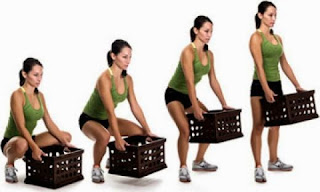
Safe lifting plays an important role in keeping your back healthy. Although there doesn't seem to be just one right method to lift an object, there are lifting techniques that take strain off the low back area.
These techniques have several steps in common. They recommend you "size up the load". That is, look it over. Decide if you can handle it alone or if you need help. When in doubt, ask for help. Moving a box or other object that is too heavy for one person is not worth strained and sore back muscles.
You should also "size up the area". Look over the area where you are carrying the object to, and make sure it is clear of obstacles before beginning to carry the object.
For that period of time spent lifting, the load becomes a part of your body. You support and propel the object while it is attached to you. This attachment should be firm and sure. Get a good grip.
Attaching yourself to a load will change your balance. To keep this change of balance to a minimum, keep the load close to your body, to your normal center of gravity between the legs, between the shoulders.
Good foot position allows you to keep your balance and bring into play the full power of your leg muscles. Leg muscles are more powerful and more durable than back muscles. Let your leg muscles do the work. Again, footwork is important once you avoid twisting your upper body. Use your feet to change direction. Don't twist your body. Twisting compounds the stress of the lift and affects your balance.
When you have someone helping you lift an object, teamwork becomes important. If you're going to be carrying the load to another point, both of you should decide in advance how it is to be handled. Check the route and clearance. One person should be the leader and be in a position to observe and direct the other. Lifting and lowering should be done in unison. Don't let the load drop suddenly without warning your partner.
Everyone has a way of lifting that seems most natural. Examine yours to see if you are using lifting techniques that reduce strain on your lower back. As the employee making the lift, you're being counted on to make lifts that are safe and comfortable for you based on the items we've discussed:
- Stay in shape
- Size up the load; ask for help, if needed
- Get a good grip
- Keep the load close
- Keep your balance with footwork
- Let your leg muscles do the work
- Don't twist your body
Machine Guarding
- Debris, particulates and other projectiles from flying out of the machine
- Pinch-points caused by moving components
- People from entering energized work areas
- Machines or components within machines from inadvertently shifting or moving during operations
- Sparks, electrical arcs and internal fires from expanding beyond a controlled area within the machine
- Whipping from broken belts and other materials under high tension or stress
- Using ventilation systems and hoods to reduce or prevent inhalation of hazardous fumes
- Using retaining walls, enclosures and spill containment devices to prevent chemicals, objects and other materials from reaching undesirable areas
- Ensure the guarding is properly fastened or anchored and not loose.
- Verify the guarding is strong enough to withstand the expected forces.
- If the guarding is perforated (for example a fence) then the holes in the guarding should be smaller than the smallest object that could fly from the machine.
- Always inspect and verify the guarding is adequate before operating the machine.
Head Protection – Hard Hats
- Protects you from falling objects.
- Protects your head in case of a fall or bump’s into machinery, ductwork and the like.
- Protects you from electrical shocks and burns if it's a non-conductive hat.
- It is a neat place to put stickers and decals, especially first aid trained or safety committee member.
- Always keep your hard hat properly adjusted.
- Do not cut, bend or heat the hard hat.
- When you see deep gouges or cracks in the shell, or the hat color turns dull, its time for a new one.
- Do not wear it backwards.
- Don’t put anything inside your hard hat except your head.
- Don’t try to substitute it for a “bump cap.” The bump cap will not provide adequate protection from falling objects; just isn’t strong enough.
- It is not a stool or a step; doing so weakens the shell of the hard hat.


Hand Protection
- Wear gloves when you work with caustic chemicals, rough surfaces, harp instruments and other materials that might injure your hands. Keep the gloves clean and in good condition and replace them if they are worn out or damaged by chemicals.
- Never wear gloves when you work on machines such as drills, saws, grinders or other rotating equipment. These types of equipment can catch the glove and pull the hand into danger.
- Do not wear rings, watches, bracelets and even necklaces, when working on machinery or anything on which the jewelry might be caught.
- Use your machine to do the job for which it was intended. Do not try to squeeze an additional task out of it. It may squeeze your hand.
- Before you use a machine that is guarded, double-check to ensure the guard is in place and the machine itself is working correctly.
- Remember, machines are guarded for a very good reason — your protection. Never put your fingers or your hands through, under, over or around the guard.
- Watch what you grab. How can it hurt your hand?
- Keep your work area clean and well arranged so you do not place a hand in a miscellaneous pile and come away with a cut. Any time you have been working with sharp instruments, put them away in their cases, out of harm's way.
- Use your brain as well as your hands when performing housekeeping tasks in your area. For example, do not push trash down into a trashcan with your fingers; someone else may have thrown in broken glass, hardware or a solvent-soaked rag or towel.
- Keep your hands clean, washing them often with soap and warm water to help prevent dermatitis. Barrier hand creams applied before beginning a job can protect against skin irritants.